
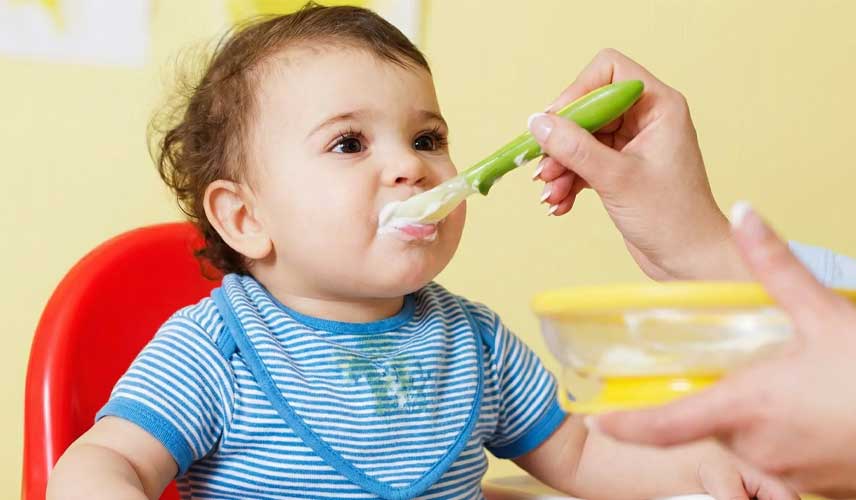
My Baby Refuses to Eat Solid Foods
A mother's priority is to ensure that everything related to her baby is going well. However, many different issues can arise during the process of raising a baby. You may feel sad if your milk is insufficient. If your child has a poor appetite or frequently falls ill, you may spend anxious days. If you are one of the mothers saying, “My baby refuses to eat solid foods”, you will be looking for solutions. You will research the issue related to your child's problem and try to find the best doctor and the healthiest and most effective healing methods.
The refusal of solid foods by babies is a concern that troubles and worries many mothers. Sometimes, this process requires a lot of patience, and various methods may need to be tried.
Today, the sixth month of life is considered the ideal transition period to solid foods for babies. According to the World Health Organization, breast milk is sufficient to meet all the needs of healthy growing babies aged 0-6 months without weight loss. The organization also recommends that even a 9-month-old baby should be fed with breast milk at a rate of 70%.
On the other hand, every baby's developmental process is not the same. If a baby is not benefiting enough from breast milk, if their body weight is not increasing as it should, or if the amount of breast milk is insufficient, doctors may recommend introducing solid foods starting from 4 months.
From the sixth month onwards, breast milk begins to become insufficient. To meet the increasing energy needs of the baby, new food items should be gradually added to the feeding routine. It is recommended that the transition to solid foods begins during this period and is not postponed.
My Baby Refuses Solid Food
Mothers trying to get their 6-month-old or older babies to start consuming solid foods may face various challenges. For some babies, even getting a few spoonfuls of soup can be an issue. You try fruit juice, you try other things, you make some tricks, but you just can't achieve victory. But you must not lose hope and continue, because it is really important to get your baby accustomed to consuming solid foods as soon as possible.
If you say, “My baby refuses to eat solid foods”, the following tips may be helpful.
Make Sure Your Baby is Hungry
A baby may not want to eat anything when their stomach is full. Therefore, when you want to introduce a new solid food, make sure they are hungry. This way, they will at least be eager to taste it. However, they should be a little hungry, not too much.
Don't Give Up Just Because Your Baby Doesn't Like Solid Food
One of the mistakes made by mothers complaining that “My baby refuses to eat solid foods” is thinking that a baby who rejects a certain food the first time it is offered will never like that food. If your baby has turned down the food you offered, try again a few days later. If you fail again, try once more after 1 week to 10 days. Change the cooking and presentation method from time to time.
Be Patient and Creative During the Transition to Solid Foods
You should know from the beginning that the process of getting a baby accustomed to foods they have not tried before can take a long time. Each baby's attitude in this regard is not the same. Some do not cause much trouble for their mothers, while others can be quite stubborn. But with patience, you can eventually overcome this challenge. Look around you; adults do not like every food either, but there is no adult who completely rejects salty or chunky foods. Over time, you can get your baby accustomed to almost all kinds of food.
If one key to this process is patience, the other is creativity. If your baby did not like a certain food cooked in olive oil, try cooking it with meat; if they do not like that either, grind it and add it to their soup or boil it. Use your creativity in cooking and presentation as long as you stick to healthy methods. Do your best to make the food they rejected appealing to them.
Avoid Power Struggles with Your Baby
Do not engage in a power struggle with your baby who rejects the food you offer. They will win the battle, and you will be left feeling upset and angry. When it comes to feeding babies, the path ahead is not a straight one; it is inevitable that there will be zigzags along the way.
Your goal is to introduce your baby to new flavors, diversify their feeding routine, and familiarize them with new nutritious foods. A baby who has been enjoying and peacefully breastfeeding for months will not naturally adapt to this change in routine immediately. Be patient, not stubborn and insistent. If your baby rejects a solid food you offer for the first time, take a step back for a while and then try again.
Do Not Puree Foods Completely
Foods that are pureed become very smooth, which delays babies' adaptation to chunky foods. Most babies who are 6 months old have the ability to manipulate food in their mouths. Chunky food items also help develop the baby's mouth and tongue muscles.
Initially, prefer to pass foods through a fine sieve. When your baby is 9-10 months old, you can start offering them mashed with a fork.
Do Not Give Soup at Every Meal
During the transition to solid foods, avoid giving soup every time. Soups made with vitamin-rich, nutritious vegetables are beneficial, but since they contain at least half water, they are not efficient enough for the baby. Vegetable purees prepared with age-appropriate ingredients and passed through a fine sieve are much more effective for the baby's health. If the puree you prepare is too thick, you can thin it out with a little water or breast milk, but be careful not to make it soupy. This can lead to the baby's stomach being filled with water.
Offer Solid Foods with a Spoon, Not a Bottle
During the transition from breast milk to solid foods, it is necessary to avoid using a bottle. If you want to instill proper eating habits in your baby, you should offer these foods with a spoon. This way, you will help them develop the habit of being fed with a spoon. Additionally, very thick foods can cause unwanted situations when sucked from a bottle nipple.
Seat Your Baby at the Table
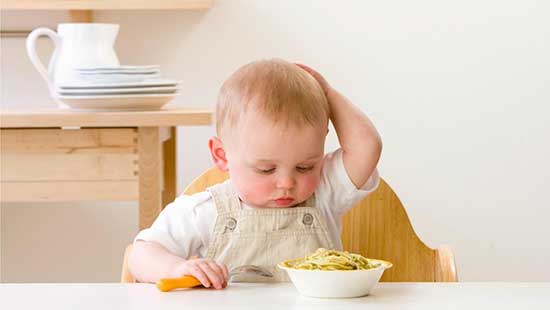
If you say, “My baby refuses to eat solid foods”, one of the things you should do is to seat your baby at the dining table you have prepared. 7-month-old babies can sit comfortably and bring food to their mouths. Get a safe high chair and make a place for your baby at your table. Place the foods you want them to eat in front of them. Sitting down to eat with the family will delight and encourage the baby. During this time, they will also see how older children and adults eat. Over time, they will start to imitate them and perform the correct actions.
During this time, you decide what your baby will eat, but let them decide how much they will eat. Avoid forcing and conflict, especially if you have placed something they will taste for the first time in front of them.
What Should You Start Solid Foods With?
Before starting to give solid foods to your baby, have their routine check-ups done and get advice from your doctor.
The question, “What should you start solid foods with?” has different answers, and there are no comprehensive, controlled studies showing that any of these is superior to the others. Additionally, babies' needs and families' eating habits vary. However, there are some basic information you should consider in this regard.
However, some experiences suggest that starting with yogurt and vegetable puree may be better than starting with fruit. Fruits contain sugar in varying amounts, and it is not recommended to get the baby accustomed to sugary foods. Additionally, they are tastier to babies compared to vegetables. Therefore, a baby who starts the transition to solid foods by tasting fruits may have difficulty eating vegetables later.
Vegetables contain many vitamins and minerals, so it is really important to make babies love eating vegetables.
When preparing vegetable puree for your baby, always choose fresh seasonal vegetables. These should also be vegetables that have a low risk of causing allergies and can be easily pureed. Mix two seasonal vegetables that you have steamed using olive oil with about a teaspoon of boiled rice, bulgur, oats, or semolina. Then pass this mixture through a fine sieve. If it is too thick, thin it out with a bit of breast milk or water, but be careful not to make it soupy.
Puddings and fruit purees are also among the solid foods that can be given to babies. However, as mentioned above, it may be more challenging to get a baby who starts consuming solid foods with fruits to eat vegetables. Still, if you prefer to start with fruit, choose fresh seasonal fruits. However, do not start with fruits that have a higher risk of causing allergic reactions, such as strawberries and pineapples.
Do Not Start All Solid Foods in the Same Week
Your baby's body may be allergic to some foods they will taste for the first time. If you give many solid foods within the same week, you may not be able to identify which one caused an allergic reaction. Therefore, it is better to introduce new foods at least one week apart.
Suitable Conditions for the First Spoon Feeding Attempt
Before starting to give solid foods to your baby with a spoon, regularly seat them at the family table and make them feel that mealtime is special.
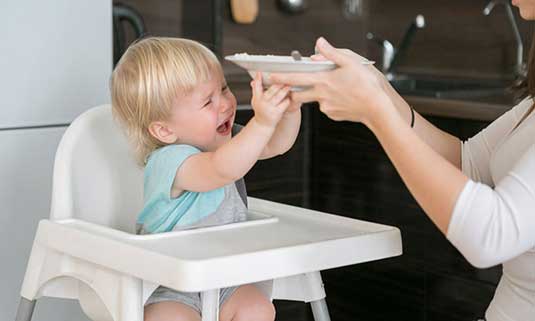
Choose a suitable time for the first spoon feeding attempt for both your baby and yourself. The baby should be well-rested, happy, and a little hungry. You should not be anxious; you should have plenty of time and feel calm and relaxed.
Tips for Preparing Solid Foods for Your Baby
Solid food is a different version of adult food; it is strained, chopped, or grated. If you prepare the solid foods you will give to your baby with your own hands, you can be sure of what is in the food. You also have the chance to produce meals that suit their taste. When preparing solid food for your baby, it is recommended to pay attention to the following points:
- Use fresh vegetables and fruits.
- Prefer steaming vegetables.
- Prepare a quantity of solid food that you can use for several meals at once.
- Do not add salt or sugar.
- Avoid frying methods.
- You do not know how much of the carefully prepared meal will be eaten. In fact, you do not even know if it will be eaten. Therefore, serve it in small portions.
- Do not continue feeding your baby with completely pureed foods for more than 1-1.5 months. Prefer to mash the foods with a fork and then break them into small pieces.
Child Health and Safety Other Content in the Category

Child Health and Safety
Newborn Care
Child Health and Safety
My Baby Refuses to Eat Solid Foods
Child Health and Safety
Ways to Protect Children from Coronavirus
Child Health and Safety
What to Do to Instill Brushing Habits in Children
Child Health and Safety
Child Safety: Medications Should Be Stored Out of Children's Reach

Child Health and Safety
10 Effective Tips for Child Health
Child Health and Safety
8 Factors That Cause Babies to Cry
Child Health and Safety
Down Syndrome Diagnosis Methods
Child Health and Safety
When Do Babies Crawl
Child Health and Safety
Information About Teething Period in Infants
Child Health and Safety
How Much Water Should Babies Drink?
Child Health and Safety
10 Things to Do for a Healthy Pregnancy

Child Health and Safety
10 Ways to Prevent Sugar Consumption in Children

Child Health and Safety
Frequently Asked Questions About Cancer and Chemotherapy
Child Health and Safety