
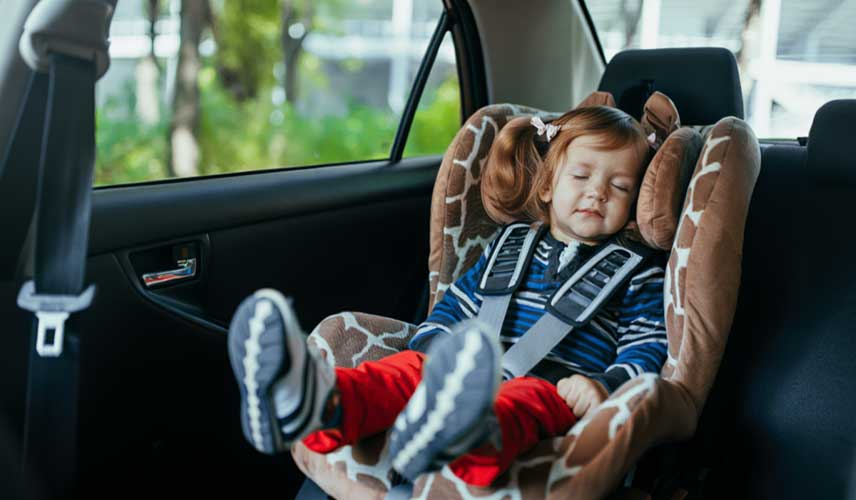
Child Safety in Vehicles
According to a study conducted in 2010, a significant portion of children who should be seated in car seats in our country are found to be seated in the front seat instead, which is a very, very big mistake. Our lack of diligence regarding child safety in vehicles leads to thousands of children being injured or losing their lives each year. With a law enacted on June 1, 2010, the aim is to reduce this rate in Turkey, making the use of child car seats mandatory.
Children under 1.5 meters tall and weighing less than 36 kilograms traveling in a vehicle equipped with a child safety seat significantly reduces the likelihood of injury or death due to traffic accidents. Proper use of car seats ensures a 71% reduction in fatalities resulting from accidents. These striking statistics demonstrate that child safety in vehicles is not only a legal obligation but also a vital responsibility.
Why is a Child Car Seat Vital?
In ensuring the safety of children traveling in vehicles, seat belts designed for adults are not sufficient. In the event of an accident, a seat belt designed for adults can cause serious harm to a child's neck, abdomen, or head. Children's body structures are different from adults; their bones are more fragile, and their muscles are less developed. Therefore, they require special protection to absorb the significant forces generated during a collision.
-
Physical Laws: At the moment of an accident, all objects inside the vehicle move forward at the same speed as the vehicle. When a collision occurs, these objects suddenly stop, and the weight of a child thrown forward increases exponentially at the moment of the accident. This force is so great that even an adult cannot hold the child in their lap.
-
Seat Belt Compatibility: Adult seat belts are designed to distribute the force during a collision across the strongest areas of the body, such as the shoulder and hip bones. However, in a child, the belt passes over sensitive areas like the neck and abdomen, which can lead to serious internal injuries.
Guide to Choosing the Right Car Seat
The features of the safety seat required in vehicles vary according to the child's age, weight, and height. Choosing the right seat is the first step in ensuring your child's safety.
-
Infant Seat (Group 0): An infant seat (infant type) should be used for children weighing less than 13 kilograms. These seats are designed to support the baby's head and neck and protect the spine. They should always be installed facing the rear, looking at the back window, in the rear seat of the vehicle.
-
Child Car Seat (Group 1): For those weighing between 9-18 kilograms, a child car seat must be used. These seats are installed facing forward and secure the child with a seat belt system.
-
Booster Seat (Group 2 and 3): For children over 15 kilograms, in-vehicle booster seats should be used. These seats raise the child to a height that allows the adult seat belt to pass over the shoulder and hip. Children should continue to use these seats until they reach a height of 1.5 meters.
Correct Installation and Safety Standards:
-
When you acquire a child car seat, you must also learn how to install it securely in your vehicle. An incorrectly installed seat reduces its protective effect. It is important that the seats comply with European Union standards such as ECE 44.03 or later.
-
The Isofix system allows child seats to be installed directly and securely in the vehicle. If your vehicle does not have Isofix, you can have this device installed for your child's safety.
Other Precautions to Take Before and During Travel
Child safety in vehicles is a broad topic that includes not only measures like safety seats and seat belts but also other steps to make travel safer and more comfortable.
-
Travel Timing: A family planning to travel should leave at times when the child is likely to be going to sleep, making the journey more comfortable.
-
Clothing and Comfort: For long journeys, children should wear clothes made entirely of cotton, without tight elastic bands.
-
Entertainment and Distraction: Child safety in vehicles also includes eliminating distractions for the driver. A study conducted in 2011 showed that shouting inside the vehicle is one of the main factors distracting drivers. Having toys in the vehicle to keep the child entertained during long journeys can prevent the child from getting bored and trying to entertain themselves by making noise. However, the toys kept in the car should be carefully selected; heavy or sharp toys are not suitable alternatives to be kept during travel. Soft toys, children's books, and DVDs and CDs for children allow children to be entertained without creating danger.
-
Sunshade: When traveling with a child in the summer months, it is also important to install sunshades on the windows. This protects your child from the harmful effects of sunlight.
Parents' Responsibility and General Rules
Having an adult sit next to the children also eliminates the possibility of the driver constantly looking back and being distracted by them. Parents must always be vigilant for their children's safety.
-
Never Leave Them Alone in the Back Seat: Even if a child is sitting alone in a car seat, having an adult next to them allows you to address potential issues (loose seat belt, child's restlessness, etc.) immediately.
-
Seat Selection and Inspection: Before purchasing a child car seat, make sure to have your child try the seat, check the suitability of the belt adjustments, and ensure it is comfortable.
-
Cleaning: Clean the seat only with water and soap. Other cleaning agents can make the seat surface flammable.
In conclusion, child safety in vehicles can be ensured through a series of precautions and conscious behaviors. The use of car seats is not just a legal obligation; it is the most effective way to protect the life of your most valuable possession, your child.
Child Health and Safety Other Content in the Category

Child Health and Safety
Newborn Care
Child Health and Safety
My Baby Refuses to Eat Solid Foods
Child Health and Safety
Ways to Protect Children from Coronavirus

Child Health and Safety
What to Do to Instill Brushing Habits in Children

Child Health and Safety
Child Safety: Medications Should Be Stored Out of Children's Reach

Child Health and Safety
10 Effective Tips for Child Health

Child Health and Safety
8 Factors That Cause Babies to Cry

Child Health and Safety
Down Syndrome Diagnosis Methods

Child Health and Safety
When Do Babies Crawl

Child Health and Safety
Information About Teething Period in Infants
Child Health and Safety
How Much Water Should Babies Drink?

Child Health and Safety
10 Things to Do for a Healthy Pregnancy
Child Health and Safety
10 Ways to Prevent Sugar Consumption in Children

Child Health and Safety
Frequently Asked Questions About Cancer and Chemotherapy

Child Health and Safety